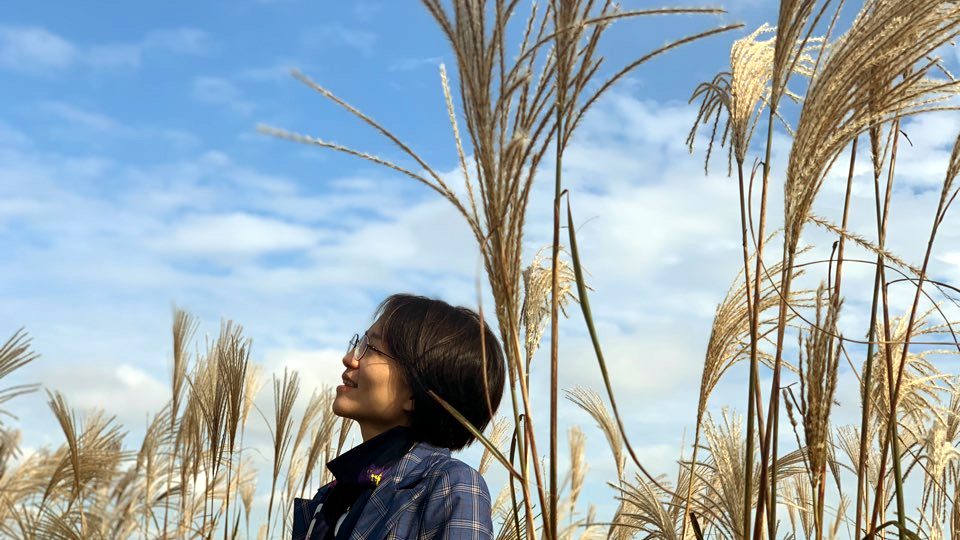
Joohee Seo standing among silver grass

Who I Am

I have come to believe that suffering is an inevitable part of being human. Through my own life, through long clinical experience, and through becoming a mother, I have learned that healing is not the removal of suffering. Much of it simply cannot be taken away. The deepest pain often comes less from the experience itself than from the layers that grow around it - the fear, the self-blame, the resistance. So my work is led by one question: how can we help people relate differently to their own suffering?

As a physician I have cared for people living with trauma and anxiety, with insomnia that will not lift, with bodily pain that no test fully explains, and with the narrowed lives that come when emotion cannot be regulated - and I have learned that a diagnosis rarely holds everything a person actually carries. What I meet again and again in the consulting room is not a single disease but a nervous system that has learned, at great cost, to protect itself.

Among these people, the ones I remember most are the adults - and especially the women - who discovered only after decades that ADHD had been part of their story all along. Their pain came not only from symptoms but from years of being misread and of blaming themselves, and they became the place where my clinical attention and my research meet. They taught me that healing begins in being deeply understood. I do not see body and mind as separate: supporting the body’s regulation makes emotional processing possible, and psychological insight, in turn, widens a person’s capacity to respond rather than react.

This conviction runs through everything I do - Korean Medicine, psychotherapy, mindfulness, Brainspotting, and research at the meeting point of clinical practice, neuroscience, contemplative traditions, and artificial intelligence. My aim is not only to reduce symptoms but to help a person grow the inner strength to bear what cannot be removed, to integrate it, and to find meaning within it - so that suffering, met with awareness and compassion, can become a source of wisdom, freedom, and a deeper connection to life.

What I Believe

At the center of my work is a conviction that has only grown firmer over the years: that beneath every symptom, every diagnosis, and every strategy a person had to build in order to survive, there is something in them that was never damaged.

Different traditions have called this by different names. Buddhist psychology speaks of an original nature present in every being. Internal Family Systems calls it the Self - calm, curious, compassionate, whole. Humanistic psychology described an innate tendency toward growth. I no longer think of these as metaphors, because I have met this capacity too many times in the people I work with - even in the very moment they were certain nothing whole remained in them.

But I use this language not as doctrine, but as the language of the clinic: presence, compassion, the ethics of attention, and a person’s capacity to recover - human capacities that can be observed and cultivated in any consulting room.

And so I trust my patients completely. My role is not to fix what is broken, but to help clear away what stands between a person and their own deepest capacity for awareness and compassion - the fear, the shame, the residue of trauma the body still holds. When that capacity comes forward, change is no longer something a clinician does to a patient. It is something that was waiting to happen.

I want to be honest about what sustains this work. Contemplative practice is not a technique I apply in the consulting room; it is the ground I stand on. The questions that guide my research and my clinical work are, in the end, the questions I carry as a person: what is the mind, and what remains when suffering is fully met? I have come to believe that becoming clearer, freer, and more compassionate myself is not separate from serving the people I care for - it is its root.

How I Understand Healing

  1. Every human being experiences suffering.
  2. More than the pain itself, it is our clinging and resistance to it that deepens suffering.
  3. Healing is not the removal of sufferingit is helping a person bear, digest, integrate, and find meaning in their experience.
  4. Body and mind must support that process togetherattention, emotion, and bodily regulation move as one process, not as separate tasks.
  5. And as a result, a person becomesa little freer, a little more compassionate, a little more able to live their own life.

Still Learning

The name I add at the end - lifelong learner - is perhaps the one I trust most. What I know how to do today is the result of never having been finished, and that will remain true.

Some of this learning is recent. I completed the standard training program for hospice and palliative-care professionals, and in January 2026, during Dr. Christopher Germer’s visit to Korea, I completed a workshop on self-compassion for shame. I finished Kathy Steele’s ten-session certified intensive on the treatment of dissociative disorders, and completed the Polyvagal Institute’s Embodying Safety certification, which integrates yoga, qigong, and polyvagal theory - a bridge that suited me well, joining Asia’s contemplative movement traditions with the neurophysiology of safety.

And some of it lies ahead. From July 2026 I lead a study on Korean Medicine resources within the public healthcare system’s disaster response, and in late 2026 I will complete the Self-Compassion for Healthcare Communities (SCHC) program and its facilitator training, so I can bring structured self-compassion practice to fellow healthcare workers. I have enrolled in Deep Brain Reorienting, a neuroscience-based trauma therapy, and I plan to complete Lymph Drainage Therapy Level 1 in order to keep studying how the body takes part in emotional life.

Looking back, this learning has not scattered into new fields; it has circled the same question. How does suffering emerge, across body and mind, relationships and systems - and what makes recovery possible? The more I learn, the more it seems I am learning to stay near this question a little longer, and a little better.